
Vacant Office Building in Windsor Repositioned Into 46 Apartments at 285 Giles Blvd
Posted on May 1st 2026 by Lalovich
Why converting outdated office space into housing could be one of the most practical ways to bring life back to downtown Windsor
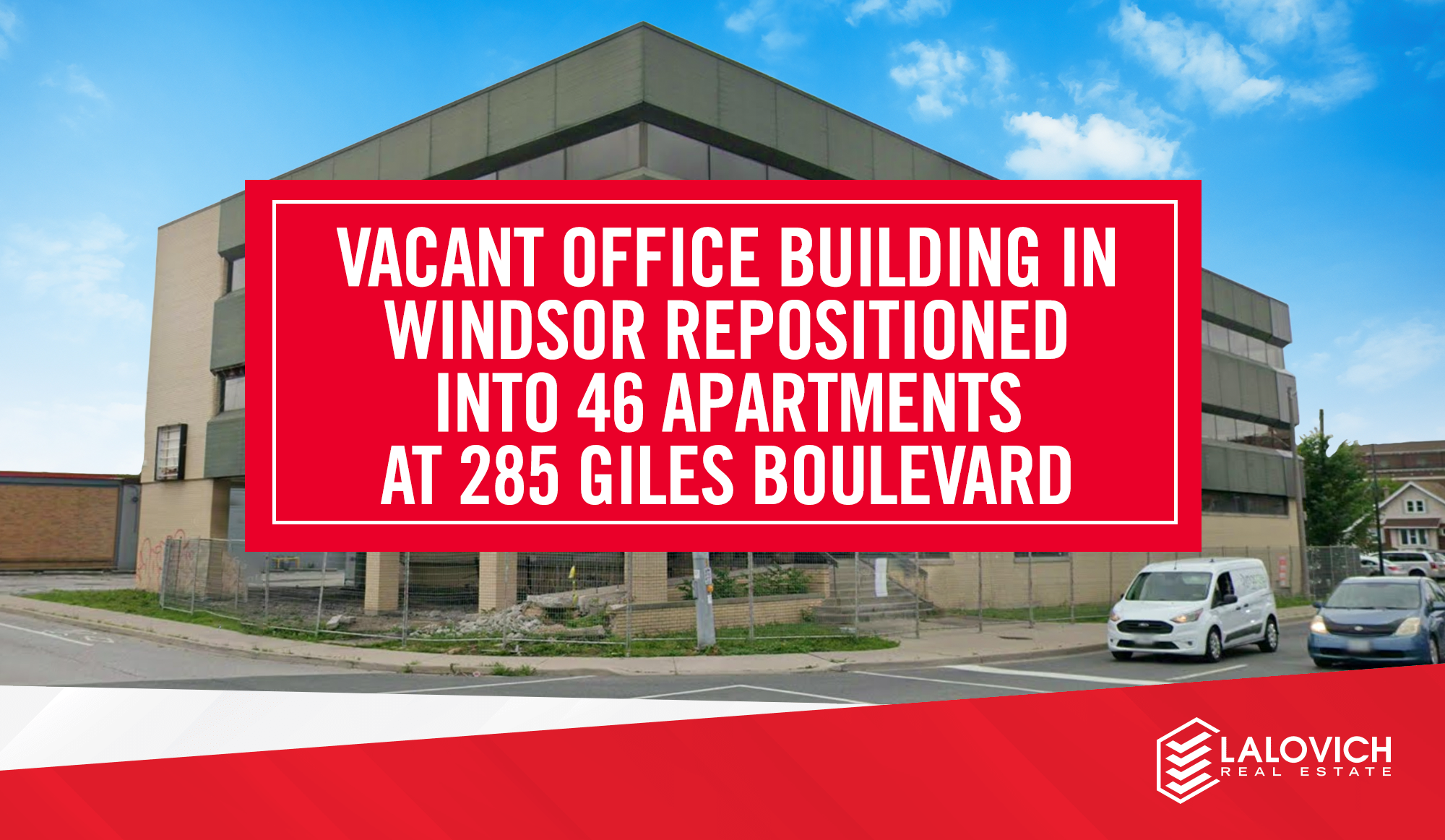
For years, the former GreenShield building at 285 Giles Blvd. sat empty on the edge of downtown Windsor. If you have spent any time in the core, you probably drove by it and thought the same thing most people did. It felt like a missed opportunity. A well located building with no real use. That is finally changing.
The property is now being converted into 46 loft-style apartments, with a mix of studio, one-bedroom and two-bedroom units. The plan also includes a full gym, pickleball court, golf simulator and a proper common area for residents. Each unit is expected to have dedicated parking as well, which is not always easy to find this close to downtown.
At a surface level, this is a solid redevelopment story. But the bigger takeaway is what this represents for Windsor’s real estate market. A lot of older office space simply does not work the way it used to.
Tenant expectations have changed. Layouts, amenities, parking and overall building quality matter more than ever. Some of these older buildings struggle to compete without major investment, and in many cases they end up sitting vacant longer than anyone would like. Leaving them empty is not a strategy.
Repositioning them into residential is one of the more practical paths forward, especially in a market like Windsor where there is still demand for housing in and around the core.
The key point here is simple: the more people living downtown, the better.
Residents are what drive activity. They support restaurants, retail, coffee shops and services. They create consistent foot traffic. Without that base, it is difficult for any downtown to build real momentum.
Projects like this start to move the needle in the right direction.
If this conversion proves successful, it opens the door for other property owners and developers to look at similar opportunities across the city. Not every building will make sense for this type of repositioning, but there are more than a few underutilized assets where this approach could work.
From an investment perspective, this is also worth paying attention to. It shows how shifting a property to its highest and best use can unlock value that was not there before. An empty office building produces nothing. A stabilized residential asset with strong demand is a completely different story.
There is still a lot to figure out when it comes to costs, approvals and execution. These are not simple projects. But the direction is clear.
Windsor does not just need more buildings. It needs better use of the buildings it already has.
This is a step in that direction.
Curious what you think. Is this the kind of development Windsor needs more of, or are there better ways to bring the core back to life?
Share: Share on facebook Send it with e-mail Share on twitter Share on linkedin